
As Told By: Josh York, Founder of Soft Goods
The Maker’s Mark: A Study in Scale & Substance
I grew up in the suburbs of Detroit, a place where the city was often viewed from the safety of a car window on the way to a Red Wings game. My mom felt it was too dangerous to explore, but I was always drawn to it. There was an energy in the arts, the culture, and the “cut and sew” world that I hadn’t known anywhere else. I started making T-shirts at the kitchen table with my mom—designing on PowerPoint and ironing on transfers—and selling them out of my locker. That early spark eventually led me to quit a corporate supply chain career to move back home, live with my parents, and try to create jobs in the city I loved. I didn’t want to watch the comeback from the sidelines; I wanted to be part of the engine.
What keeps me rooted here is a mix of family and a specific kind of community generosity. I’ve lived in other cities, but Detroit is different; instead of being guarded with their resources, people here want to help you build. It’s been eye-opening to travel recently to fashion events and realize that the rest of the world is starting to see what we see. I was shocked by how many people I met abroad who had visited and loved Detroit. It brings me a huge sense of pride to hear someone in Paris talk about a concert they saw here or how much “cooler” we are than other industrial cities. We’re finally owning a story of resilience that’s resonating globally.
When I need to ground myself, I head to Belle Isle. My wife and I have a spot on the northeastern tip we call “Secret Beach.” I love to go there and watch the massive freighters come through the Detroit River or even take a swim in the ice-cold water. It’s an oasis where you feel completely immersed in nature, yet the city skyline is only miles down the road. If I have a moment to slow down, I always take the long way home, taking Michigan Avenue through the heart of Campus Martius and up Woodward all the way to Ferndale. Even though I work here, seeing the change in the big buildings and the historic skyline still inspires me every single time.
To feel the true rhythm of the city, you have to lean into the neighborhood enclaves. I love Eastern Market on a Saturday; it brings together people from every walk of life and perfectly represents the pulse of Detroit. Or, find a Saturday morning in the fall to sit outside at Core City Park with a bagel. If you want a literal sense of our rhythm, you can sometimes smell it: When the wind blows just right in Corktown, you get a faint, sweet scent of whiskey mash drifting over the river from the distilleries in Windsor. It’s a sensory reminder of our history as a smuggling hub during Prohibition.
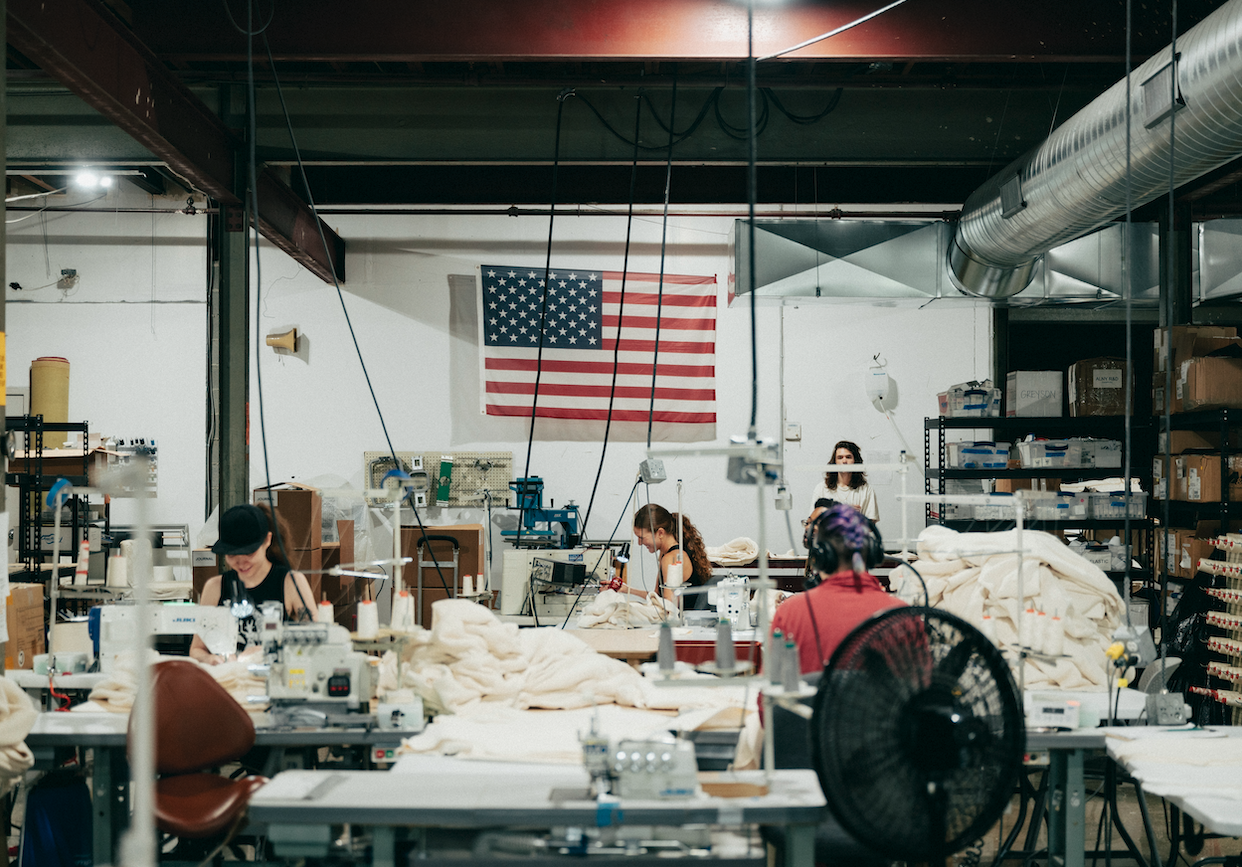
That same sense of preservation is what first drew me to the Detroit Foundation Hotel. When I quit my job in 2017, one of my first foundational meetings was at The Apparatus Room, and they were among the first to stock my brand. In a city where buildings are often left to the elements, the hotel chose to lean into its history as a fire department headquarters, much like we’ve chosen to keep manufacturing alive in Corktown. Today, when you wear one of the French Terry robes in your room, you’re feeling the work of our team just a few blocks away. It’s a partnership built on a shared belief that the best way to honor Detroit’s past is to give people a reason to stay in its future.
Ultimately, I want people to see that Detroit is rising from the ashes through the hard work of people who truly care. Skip the obvious downtown loops and get on a bike. Explore the shiny and the gritty mixed together: the thriving old neighborhoods in Southwest, the culturally rich streets of Hamtramck, or the ruins of the Packard Plant. When I look at these neighborhoods today, I don’t see the absence of what was there 100 years ago. I see a sense of hope and excitement for what is being built next.


